More Homes. Fewer Buyers. How Do You Make Yours the One They Choose?
The Twin Cities housing market is changing. More homes are competing for buyers, and fewer are going under contract. But that doesn't mean sellers are out of options.
It means understanding what makes buyers choose one home over another is becoming more important.
And surprisingly, getting the price you want isn't always about starting with the highest asking price.
What's happening in the Twin Cities housing market?
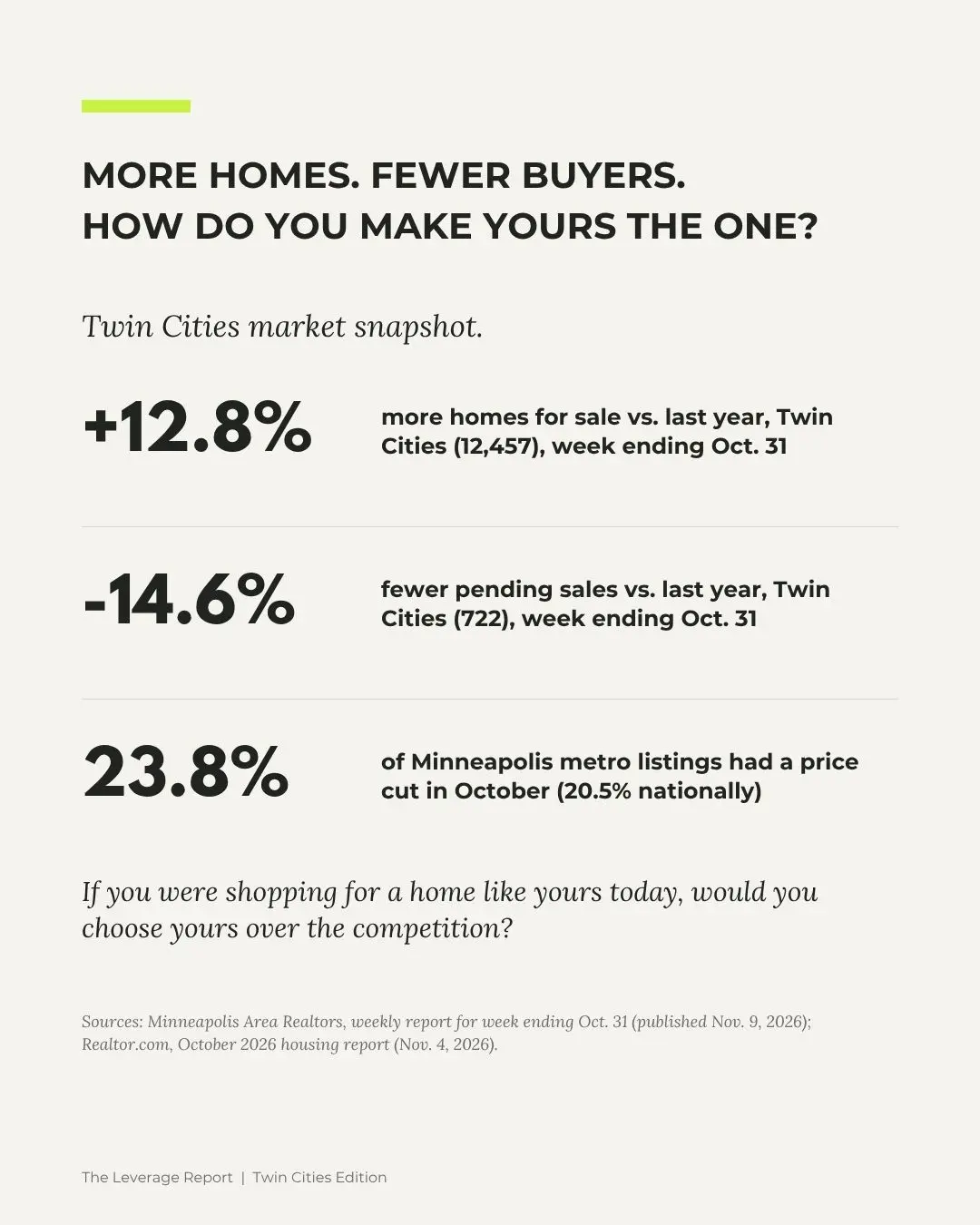
According to the latest Minneapolis Area Realtors report, for the week ending October 31:
- Homes for sale: 12,457, up 12.8% from last year.
- Pending sales: 722, down 14.6%.
- New listings: 1,049, down 13.9%.
Meanwhile, September's median sale price was $395,000, up 1.3% year over year.
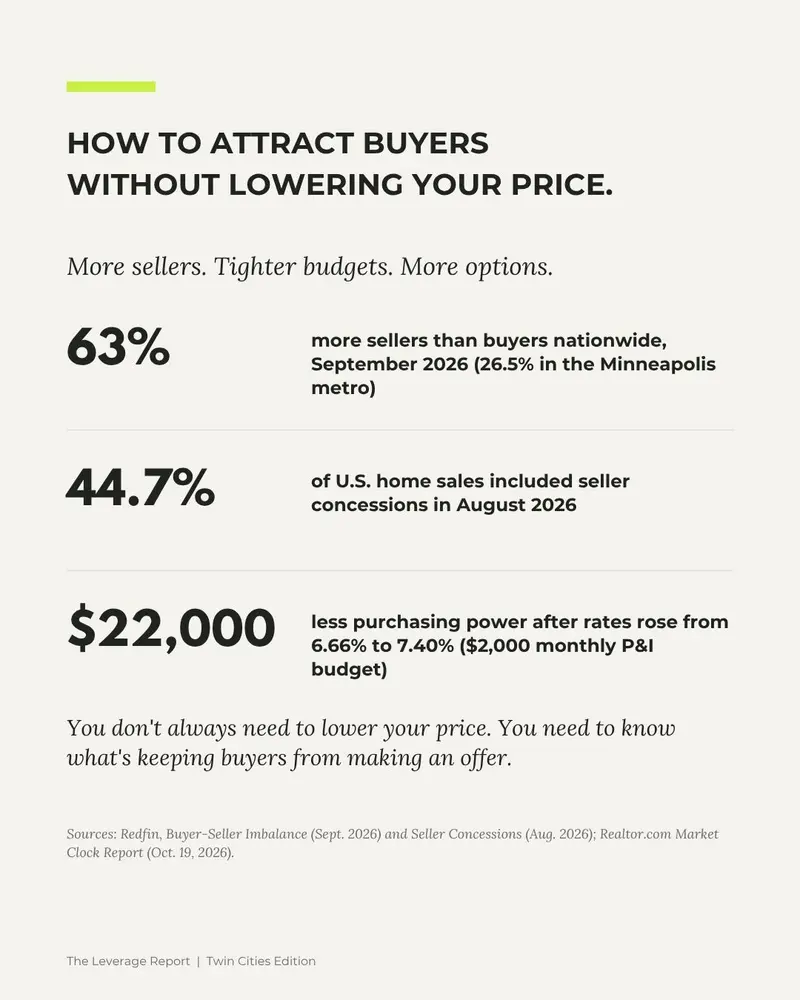
There's another interesting development. Realtor.com's October report found that nearly 24% of Minneapolis metro listings had reduced their asking price, compared with 20.5% nationally.
Here's what those numbers tell us: buyers have more choices, fewer homes are going under contract, and sellers are adjusting.
But homes are still selling. The question is, what makes buyers choose one over another?
The secret isn't just price. It's your buyer pool.
Your buyer pool is the group of people who could realistically purchase your home.
Think about two similar homes listed for $400,000.
One attracts 10 interested buyers and receives one offer. The other attracts 30 interested buyers and receives three offers.
Which seller is more likely to have negotiating leverage?
The second seller, because multiple interested buyers may compete for the same property.
Of course, more showings don't guarantee more offers or a higher sale price. But attracting qualified buyers creates more opportunities.
And that's something sellers can influence.
Five ways to make your home easier to choose
1. Price against today's competition, not yesterday's market
Buyers aren't comparing your home with what your neighbor sold for two years ago. They're comparing it with what's available right now.
Before listing, look at four groups of comparable homes:
- Active: What buyers can choose instead of yours.
- Pending: What buyers are choosing right now.
- Sold: What buyers have actually paid.
- Expired or withdrawn: What didn't attract an acceptable offer.
That last group is especially useful. Understanding why a home didn't sell can help you avoid repeating the same mistakes.
2. Make your first impression count
Most buyers encounter your home online before they ever step through the door.
Professional photos, an accurate floor plan, thoughtful presentation, and a compelling description help buyers decide whether your home belongs on their shortlist.
And don't overlook what makes your property different.
Maybe it's the oversized garage, private backyard, finished basement, or proximity to a favorite neighborhood amenity.
If buyers don't know about a feature, they can't value it.
3. Remove reasons for buyers to say no
A buyer might love your home but hesitate because of worn carpet, an aging furnace, or a list of small repairs.
You don't necessarily need a major renovation.
Sometimes a fresh coat of paint, minor repairs, decluttering, and a thorough cleaning can make a meaningful difference.
The goal isn't perfection. It's helping buyers feel confident about what they're purchasing.
4. Think beyond the asking price
Here's where things get interesting.
Suppose a buyer loves your home but is struggling with the cash needed at closing.
Depending on their financing, a seller credit toward closing costs or a mortgage-rate buydown might make the purchase more manageable.
Flexible closing dates, addressing inspection concerns, or including certain appliances can also make an offer more attractive.
These aren't automatically better than a price reduction. The right choice depends on the buyer's needs and what you actually keep after the sale.
5. Have a plan before the market gives you feedback
One of the biggest mistakes sellers can make is waiting weeks to decide what to do if showings are slow.
Instead, establish a review point before listing.
For example:
If we haven't reached our showing or offer expectations after two weeks, we'll review competing listings, buyer feedback, marketing performance, and pricing.
That doesn't mean automatically reducing your price on day 14.
It means making decisions based on evidence rather than hoping something changes.
What if you're planning to sell in the spring?
You don't have to wait until spring to start preparing.
In fact, this is an opportunity to get ahead.
You can review competing homes, identify worthwhile improvements, estimate your net proceeds, and understand what buyers in your price range are choosing.
And remember, the Twin Cities isn't one uniform housing market. A Woodbury townhome, a Minneapolis condo, and a Stillwater single-family home can face very different competition.
Your strategy should reflect your property, your neighborhood, and your goals.
The bottom line
The market influences what buyers are willing and able to pay. Your preparation and strategy influence how many of those buyers consider your home.
More buyer interest can create more negotiating opportunities, but it starts with understanding your competition.
That's the thinking behind my companion guide, 21 Ways to Get the Price You Want, which walks through practical ways to attract buyers, earn showings, and keep deals moving...
Text "21 WAYS" to me directly at 651-359-0843 and I'll send the 21 Ways to Get the Price You Want pdf straight to you!
Whether you're selling next month, next spring, or simply exploring your options, here's a worthwhile question:
If you were shopping for a home like yours today, would you choose yours over the competition?
If you're unsure, that's a great place to start a conversation.
Sources
- Minneapolis Area Realtors: Weekly Market Activity Reports, November 9, 2026.
- Minnesota Realtors: September 2026 Housing Market Report.
- Realtor.com: Minneapolis October 2026 Housing Market.
- Realtor.com: October 2026 National Housing Trends.
- 21 Ways to Get the Price You Want, Grant Farnum, November 9, 2026.